

If you’ve noticed green or dark patches creeping back onto your siding every spring — even after you cleaned it last year — you’re not doing anything wrong. It keeps coming back because of where you live, and once you understand what’s actually causing it, the fix is straightforward.
Wake Forest gets hit harder by exterior mold, algae, and green growth than most parts of the Triangle. Homeowners here deal with it every single year, and it’s not a coincidence.
Why does my siding keep turning green in Wake Forest?
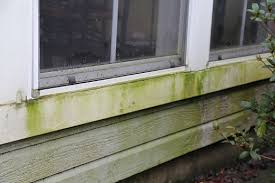 The green film on your siding is algae — and Wake Forest gives it everything it needs to grow fast and come back every season:
- The tree canopy in neighborhoods like Heritage, Holding Village, and the older sections near downtown keeps your siding shaded and damp for hours after rain and overnight dew. Algae thrives in exactly that environment
- Wake Forest sits in a wooded microclimate where overnight humidity stays high through spring and summer — your siding never fully dries out between rain events, so the algae never stops growing
- Oak and pine pollen from the surrounding trees settles into your siding laps in spring, bonds to the surface with moisture, and creates an organic layer that feeds biological growth all summer
- If your house faces north or west on one side, that wall gets almost no direct afternoon sun — it stays damp the longest and always looks the worst
Rinsing it with a hose or pressure washer moves it around but doesn’t kill it. It grows back within weeks because the root system is still in the surface.
Why do I have black streaks running down my roof?
Those dark lines running from the ridge down toward your gutters are not dirt and they’re not water staining. They’re a specific algae called Gloeocapsa Magma that feeds on the limestone in your asphalt shingles.
Wake Forest roofs are especially prone to it because of the shade and sustained humidity from the tree coverage. The algae starts at the peak where debris collects and spreads downward season after season. If you can see it from the ground, it’s been there long enough to start breaking down your shingles.
It won’t wash off in the rain. It needs a soft wash treatment — low pressure with a solution that kills the algae at the root — to actually clear it. High pressure washing on shingles voids most roof warranties and blows off the granule layer that protects the shingle from UV damage.
Why does my driveway have orange stains near the lawn edges?
That orange-red staining along your driveway edges and at the base of your downspouts is red clay — Wake County’s iron-rich soil turning into fine runoff every time it rains and bonding to your concrete as it dries.
In newer sections of Wake Forest off Capital Boulevard and toward Youngsville, construction grading exposed the clay layer and the lawns haven’t fully established yet — so every rain event kicks up a fresh wave of iron-rich runoff onto your driveway.
Regular pressure washing makes it look lighter but doesn’t fully remove it because you need an acid-based treatment to break the iron oxide bond. Without that, the stain comes back after the next rain.
So what actually fixes it?
The answer to all three problems is the same — the right cleaning method with the right chemistry, not just water pressure:
- Green siding and mold — soft wash house washing kills the algae at the surface level and clears the organic layer feeding it. Results last significantly longer than pressure washing because you’re treating it, not just rinsing it
- Black roof streaks — soft wash roof cleaning with a solution specifically formulated for Gloeocapsa Magma. Done correctly it won’t damage your shingles or void your warranty
- Orange driveway staining — acid-based rust and clay treatment before the cleaning pass, followed by surface cleaning with a rotating surface cleaner for even results without streaking
Most Wake Forest homes benefit from getting all three done in one visit — it’s more cost-effective than separate trips and everything gets done in the right sequence.
How often do Wake Forest homes need to be washed?
Once a year is the right baseline for most homes here — ideally in spring after pollen season peaks. If your lot has heavy tree coverage or your siding faces north or west, twice a year keeps it from getting ahead of you.
Waiting more than a year in Wake Forest’s climate means two full warm seasons of algae growth to clear instead of one. Annual maintenance is always faster and less expensive than playing catch-up.
How much does house washing cost in Wake Forest NC?
Most Wake Forest homes run $250–$500 for a full soft wash house wash depending on size and condition. Bundling with a driveway clean or roof wash at the same visit saves money compared to scheduling separately. Free estimates for all properties — no obligation.
If your siding is green, your roof has streaks, or your driveway edges are orange and you’ve been wondering why it keeps coming back — that’s the answer, and we can take care of all of it in one visit.
We serve Wake Forest, Raleigh, Cary, Apex, Garner, and the greater Wake County area. Schedule Pressure Washing in the Greater Raleigh Area for soft wash house washing, roof cleaning, and driveway cleaning throughout Wake Forest and the Triangle.
Learn more about our House Washing services at https://p2wash.com/residential/house-washing/
You can also explore our full Residential Pressure Washing services at https://p2wash.com/residential/
Get a Free Estimate or Book a Cleaning Today with P2 Pressure Washing.




