

Raleigh has been sitting in a damp stretch all week, with highs barely reaching the mid 70s and rain on and off since Wednesday. Concrete and siding get most of the attention when the weather turns wet, but wood takes the worst of it. Decks and fences absorb moisture in a way that other exterior surfaces do not, and several consecutive damp days leave a mark.
Here is what actually happens to wood during a stretch like this one.
Why is wood more vulnerable than siding or concrete?
Wood is porous and absorbent. Where water runs off vinyl siding or sits on the surface of concrete, wood pulls moisture into the grain and holds it. During a single rainy day that is not a problem, because the wood dries out. During four or five damp days with no real sun and high humidity, the wood never gets the chance.
That sustained saturation is what causes trouble. Wet wood is soft wood, and soft wood is vulnerable to biological growth, surface damage, and long term breakdown.
What grows on a wet deck or fence?
Several things take hold quickly when wood stays damp:
- Algae, which shows up as a green film across boards, worst in shaded sections
- Mildew, which appears as dark gray or black patches, often in corners and along the bottom boards
- Moss, which typically starts in the gaps between boards and in shaded low spots where water pools
- Surface mold, which is more common on older or unsealed wood that has lost its protective finish
 Once these take hold in the grain, they do not go away when the weather dries out. They stay dormant and reactivate the next time it rains.
Why does my deck feel slippery after a rainy week?
The slipperiness comes from the algae biofilm that develops on the surface. It is thin enough to be nearly invisible when dry but becomes genuinely slick the moment any moisture hits it. After several damp days, that film is fully active across the whole surface.
This is a real safety concern, not just a maintenance one. Deck steps in particular become hazardous, and the problem is worst in exactly the shaded areas people do not look at closely.
Does staying wet actually damage the wood itself?
Over time, yes. A few things happen:
- The wood fibers soften while saturated, which makes the surface more prone to splintering and wear
- Biological growth holds moisture against the board, extending how long it stays wet after the rain stops
- Repeated wet and dry cycles cause the boards to swell and shrink, which loosens fasteners and opens up cracks
- Any existing stain or sealer breaks down faster under sustained moisture, leaving the wood increasingly exposed
None of this is dramatic after one wet week. It is cumulative, and a deck that goes through several wet stretches each summer without maintenance ages noticeably faster than one that gets cleaned.
Should I clean it now or wait until it dries out?
The cleaning itself needs a dry window, since wood has to be dry before it can be properly cleaned and it needs time to dry fully afterward. The good news is that window is coming. Raleigh warms back into the upper 80s from Sunday through the middle of next week with much lower rain chances, which is a solid stretch for getting wood cleaned and dried properly.
The practical move is to book now for that dry window rather than waiting to see how the deck looks once it clears. The growth from this week is already established and will not reverse on its own.
Is this a good time to think about restaining?
It is, and this is worth planning around. Late summer into early fall is the right window for staining a deck or fence in the Raleigh area, once the worst heat has passed but before temperatures drop too low for the stain to cure properly.
The important part is sequence. The wood has to be properly cleaned and dried before any stain goes on. Applying stain over a deck carrying algae, mildew, or gray oxidation seals the growth in underneath rather than bonding to clean wood, which is the single most common reason a stain job fails within a season. Getting the cleaning done in the next few weeks puts you in position to stain at the right time.
What does proper wood cleaning involve?
For a wood deck or fence, the process is different from cleaning concrete. It includes applying a cleaning solution suited to the wood that lifts algae, mildew, and gray oxidation, allowing dwell time for it to work at the surface level, rinsing at controlled pressure that cleans without raising the grain, and giving the wood full time to dry afterward. Too much pressure on wood leaves a fuzzy, damaged surface that traps more debris going forward, so the method matters as much as the timing.
If your deck or fence has been sitting damp all week and you are seeing green film, dark patches, or slippery boards, the dry stretch starting Sunday is the window to get it handled. 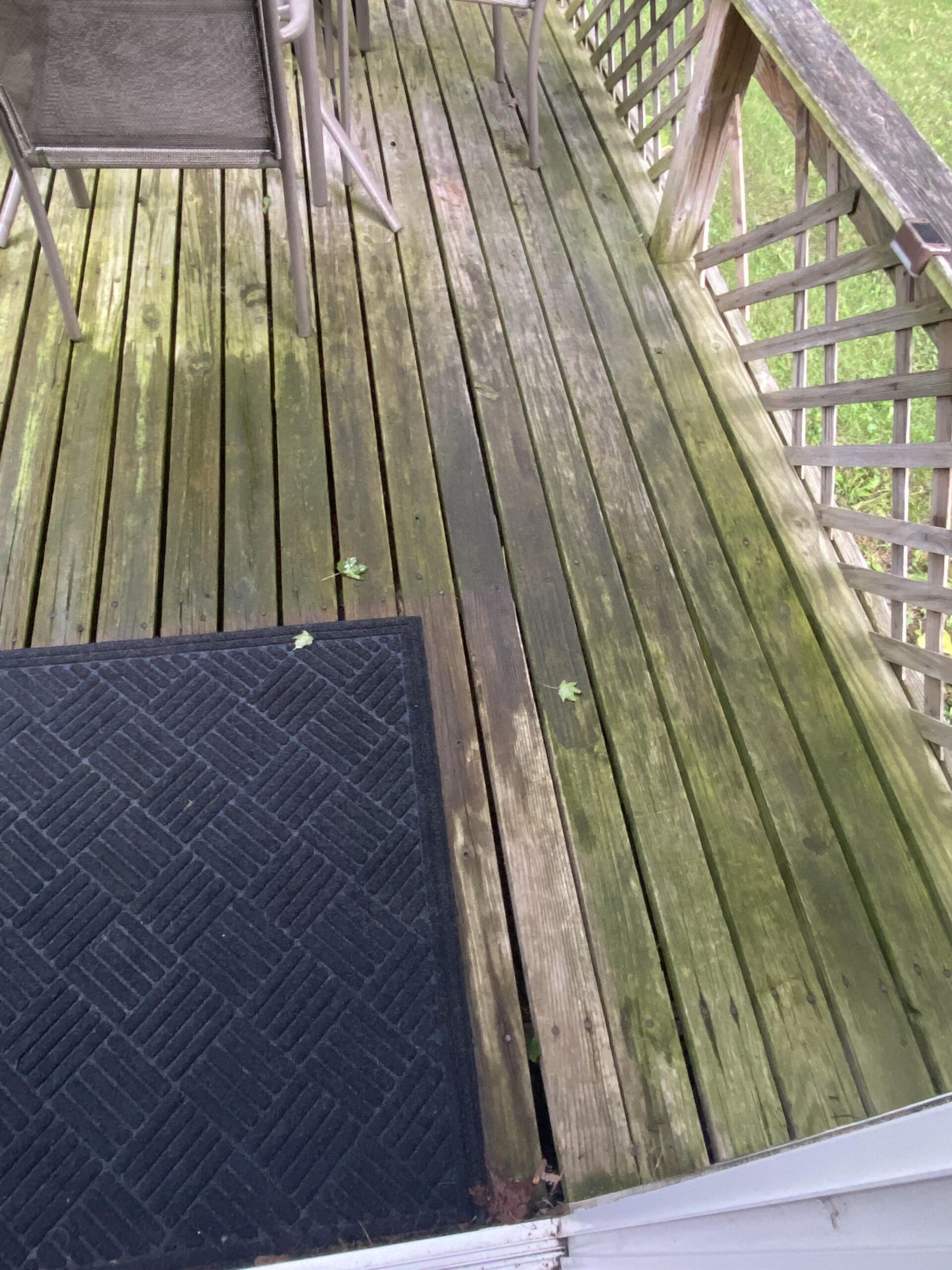
We serve Raleigh, Cary, Apex, Wake Forest, Garner, and the greater Wake County area.
Schedule Pressure Washing in the Greater Raleigh Area for deck cleaning, fence cleaning, and exterior cleaning throughout the Triangle.
Learn more about our Residential Pressure Washing services at https://p2wash.com/residential/
You can also explore our House Washing services at https://p2wash.com/residential/house-washing/
Get a Free Estimate or Book a Cleaning Today with P2 Pressure Washing. Call 919 893 3399.




