

Why the Shaded Side of Your Home Stays Green All Summer
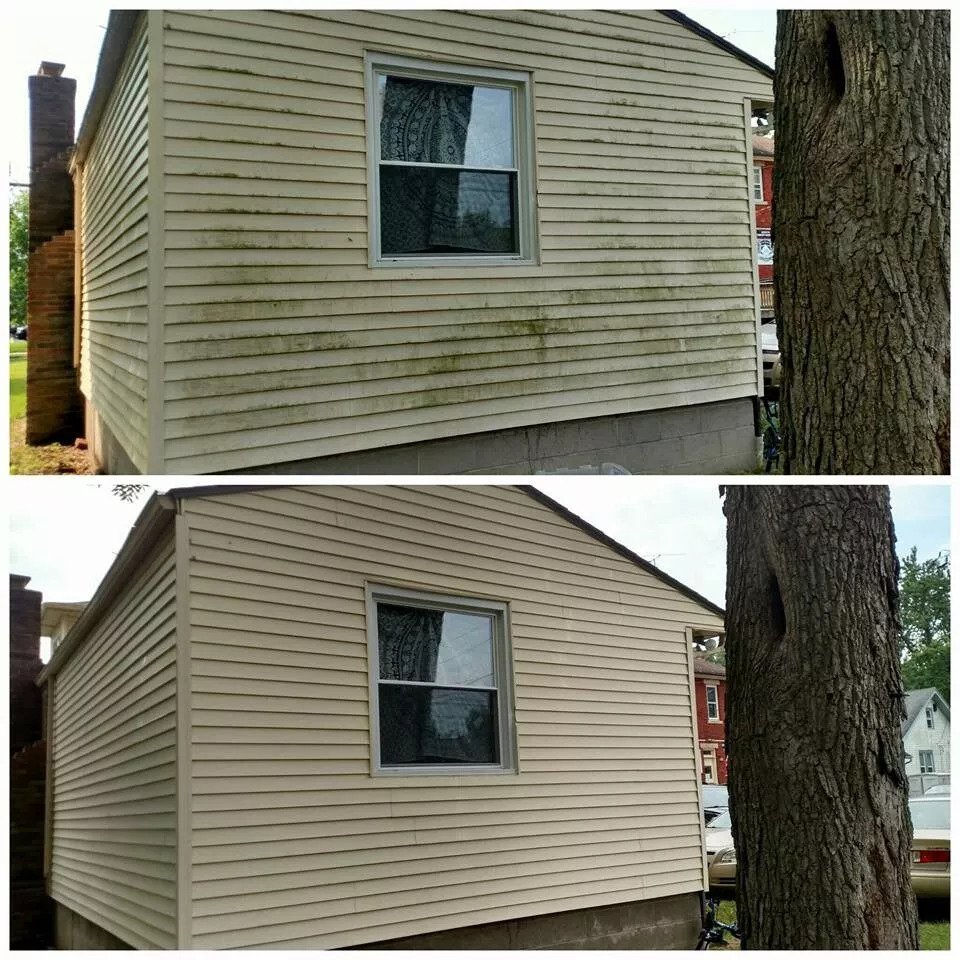
If one side of your house always looks clean while the other side has a greenish or dark gray film that keeps coming back no matter how many times it rains, the problem isn’t the weather. It’s shade — and in Cary, it’s one of the most consistent complaints we hear from homeowners every spring.
House washing Cary NC calls follow a very predictable pattern. The homes that need the most attention are almost always the ones with mature tree coverage on the north or west-facing side, tight lot lines where the neighboring house blocks airflow, or landscaping that holds moisture close to the foundation. Cary has all three in abundance — particularly in established neighborhoods like Lochmere, Preston, MacGregor Downs, and the older subdivisions off Kildaire Farm Road where the tree canopy has had decades to fill in.
The green film is algae. The dark gray streaking is a combination of mold, mildew, and airborne dirt that bonds to the surface while it’s damp. Both thrive in exactly the conditions that describe the shaded side of a Cary home in spring — low light, consistent moisture, and organic material from trees and mulch beds providing nutrients.
Why Cary homes are more prone to this than you’d expect
Cary sits in a specific microclimate pocket that makes biological growth on exterior surfaces more aggressive than in more open parts of Wake County:
- Mature tree canopy in established neighborhoods keeps siding shaded and damp for longer after every rain event
- Tighter lot spacing in many Cary subdivisions limits airflow between homes, so moisture from overnight dew and rain doesn’t evaporate the way it would on a more open lot
- HOA landscaping standards mean most properties have mulch beds running along the foundation — mulch retains moisture and sits right against the siding where the growth starts
- Clay soil that stays wet after rain longer than sandy soil, keeping the ground-level moisture high against the lower courses of siding and brick
The result is that the south and east-facing sides of the house look fine — they get sun and dry out quickly — while the north and west-facing sides stay perpetually damp enough for algae and mildew to colonize and spread.
What’s actually on your siding
Homeowners often describe it as “dirt” or “staining” but the biology is more specific than that:
- Green or yellowish-green film — algae, almost always on the shaded sections and lower courses near the mulch line
- Dark gray or black streaking — mildew and Gloeocapsa Magma (the same algae that causes black streaks on roofs), running vertically from the roofline down
- Chalky white haze on painted surfaces — oxidation accelerated by moisture and UV on the sun-exposed sections
- Tide marks along the foundation line — from rain splashback carrying soil and mulch debris up against the siding
None of this clears up on its own and none of it comes off with a garden hose. Each rain event adds a fresh layer on top of what’s already bonded to the surface.
Why rinsing makes it worse
This is the part most Cary homeowners find out the hard way. A pressure washer on siding at high pressure can force water behind the lap seams, strip caulk around windows, and blast water into the wall cavity — which creates a moisture problem inside the wall that’s far more expensive than the cleaning job you were trying to avoid.
A garden hose just smears the algae film into streaks and water lines that dry more visibly than the original buildup.
The right method for siding is soft washing — low pressure application of a cleaning solution that kills the algae and mildew at the surface, followed by a controlled rinse that doesn’t drive moisture into places it shouldn’t go. The solution does the work, not the pressure.
What a full house wash covers in Cary
For most homes in the Cary area, a soft wash house washing visit covers:
- All siding surfaces on every elevation — not just the visible street-facing side
- Trim, soffits, fascia, and gutters (exterior)
- Any brick or painted surfaces
- Front steps and porch areas
- The foundation line where splashback accumulates
The shaded side always takes the most solution and attention — that’s where the growth is deepest and where most DIY attempts fall short because they’re either using the wrong method or not treating the surface long enough for the solution to work.
A wet week like this one followed by a warm dry weekend is exactly when the difference between the clean side and the green side becomes most obvious. If that’s what you’re looking at on your Cary home right now, the timing to get it cleaned is good — before summer heat bakes everything in for another season.
We serve Cary, Apex, Raleigh, Wake Forest, Morrisville, and surrounding Wake County communities. Schedule Pressure Washing in the Greater Raleigh Area for soft wash house washing and exterior cleaning throughout the Triangle.
You can also explore our full Residential Pressure Washing services at
https://p2wash.com/residential/
Get a Free Estimate or Book a Cleaning Today with P2 Pressure Washing.

