

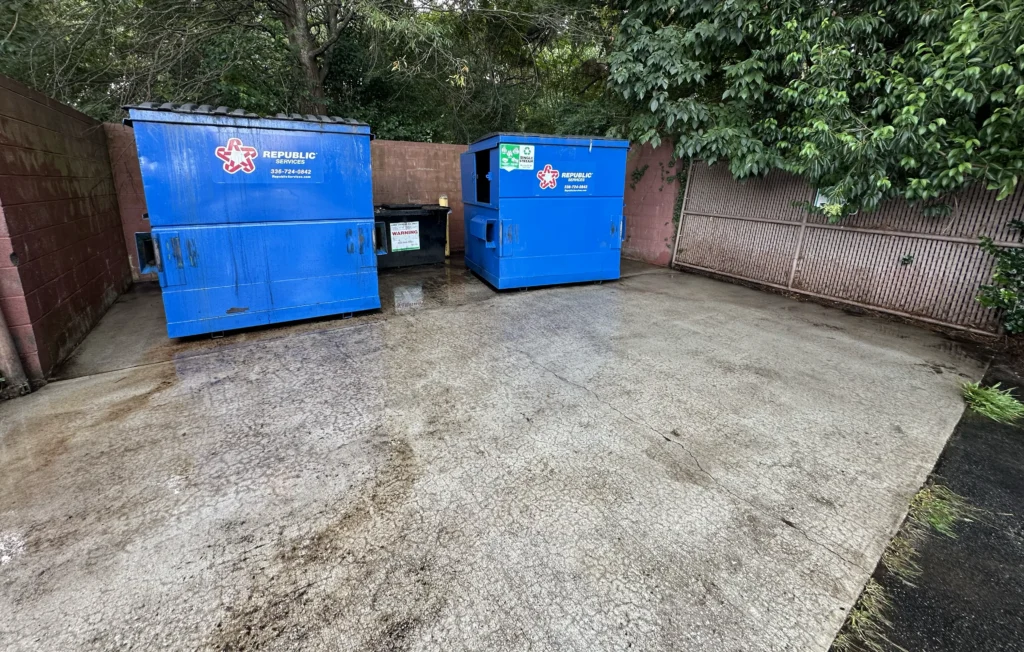
If you run a business in the Triangle, you probably have a dumpster. And if you have a dumpster, you’ve got a concrete pad that takes a beating.
Dumpster pad cleaning in the Triangle isn’t about making the “back of house” pretty. It’s about controlling grease, bacteria, odors, and pests before they turn into a bigger problem. Around Raleigh, Cary, and Garner, we see the same pattern: once a pad gets saturated with grease and spills, it holds smells and attracts insects and rodents. The longer it sits, the harder it is to fix.
Below is what business owners and property managers should know—what causes the mess, how professional cleaning works, and when it needs to be done.
Why dumpster pads get nasty (and why it doesn’t “wash away” on its own)
A dumpster pad is basically a catcher’s mitt for everything you don’t want on your property:
-
Grease and cooking oil (restaurants and strip centers are the big ones)
-
Leaking trash bags and liquid waste
-
Soft drink syrup, milk, and food scraps
-
Rust stains and metal runoff
-
Mystery chemicals from what gets tossed
In the Triangle’s heat and humidity, that mix doesn’t dry “clean.” It bakes in, turns slick, and starts to stink. If you manage properties in areas like Brier Creek, North Hills, or off Capital Boulevard, you already know how quickly pests and odors become a complaint once the weather warms up.
What dumpster pad cleaning actually does for your business
Most customers never see your dumpster area. That’s fine. But inspectors, employees, delivery drivers, and tenants do—and the problems travel from the pad to everything around it.
A properly cleaned dumpster pad helps with:
1) Pest pressure
Grease and food residue attract flies, roaches, and rodents. Cleaning doesn’t replace pest control, but it removes the “buffet” that keeps the problem going. This matters for restaurants and food service all over Raleigh-Durham, especially in the summer.
2) Odor control
That sour trash smell usually isn’t the dumpster itself. It’s the concrete. Concrete is porous, so it absorbs oils and liquids. Once that happens, you need the right chemicals and heat to break it down.
3) Slip-and-fall risk
Grease on concrete isn’t just gross, it’s slippery—especially when it gets wet. If your dumpster area is also a service lane or walkway, regular cleaning helps reduce risk.
4) Better property management results
If you’re managing a shopping center in Wake County or a stand-alone building in the Greater Raleigh Area, dumpster pads are one of those “small” maintenance items that can turn into tenant complaints fast. Keeping them under control helps you stay ahead of the calls.
How professional dumpster pad pressure washing works
Dumpster pad cleaning isn’t the same as blasting it with a wand and hoping for the best. If the goal is actually removing grease and bacteria (not just moving it around), the process matters.
Here’s the basic workflow we use on commercial pads around the Triangle:
Step 1: Inspection and game plan
We look at:
-
How deep the grease is
-
Where the runoff wants to go
-
Whether there are heavy rust spots or oil staining
-
What’s around the pad (doors, drains, landscaping, loading areas)
Restaurants usually need a stronger degreasing approach than a small office building.
Step 2: Prep and staging
We clear loose debris and make sure we can work the entire pad. We also protect nearby doors and sensitive areas. Dumpster pads are often next to back entrances, so we’re careful about overspray and keeping the work area controlled.
Step 3: Degreaser and dwell time
Grease doesn’t come out of concrete with pressure alone. We apply a commercial degreaser and let it dwell long enough to break the bond. Too short and you’re wasting time. Too long and it can dry out on the surface. This is where experience matters.
Step 4: Hot water washing (when needed)
For most dumpster pads, hot water is the difference-maker. Heat helps melt and lift grease so it can be rinsed away instead of smeared deeper into the pores.
A lot of people say “power washing” and “pressure washing” like they’re the same thing. In real-world use, the big difference is that power washing often means heated water. On greasy dumpster pads, heated water usually cleans faster and more thoroughly.
Step 5: Rinse and detail work
We rinse thoroughly and re-treat spots that need it. Pads with long-term buildup sometimes need a second pass.
Important note: Dumpster areas often connect to storm drains or sensitive drainage points. A professional should take runoff seriously and work to keep things controlled and cleaned up instead of sending greasy water across the lot.
How often should you schedule dumpster pad cleaning in the Triangle?
There’s no one schedule that fits every property, but here’s what we see around Raleigh, Cary, and Apex:
-
Restaurants / food service: monthly to quarterly is common, depending on volume
-
Convenience stores / gas stations: quarterly to semi-annual
-
Retail / office buildings: semi-annual to annual, depending on trash use and tenant behavior
-
Daycares / medical offices: usually semi-annual or annual, with extra focus on sanitation and odor control
If you’re only doing it once a year, pick a time when it matters most. In the Triangle, that’s often late spring or early summer—right when heat, humidity, and pests ramp up.
What affects the cost of dumpster pad cleaning?
Prices vary, and anyone giving you a flat number without seeing the pad is guessing. These factors are what actually drive cost:
-
Size of the pad and surrounding area that needs cleaning
-
Depth of grease/oil saturation
-
Rust stains and specialty spot removal
-
Access (tight enclosures, busy service lanes, limited water access)
-
Runoff control needs and cleanup time
-
How often it’s been maintained (first-time cleans take longer)
Regular service usually costs less over time because we’re maintaining a pad, not trying to undo years of buildup.
The big mistake: waiting until it’s “out of hand”
Dumpster pads are easier (and cheaper) to manage when they’re cleaned consistently. Once grease has soaked deep into the concrete, it takes more chemistry, more heat, and more labor to pull it back out.
If you’re a property manager in Wake County, the best time to set a cleaning schedule is before complaints start. If you’re a business owner, the best time is before the summer smell shows up and you’re fighting pests behind the building.
Schedule commercial dumpster pad cleaning in the Triangle
If you’re in Raleigh or anywhere in the Triangle and your dumpster area has grease, odor, or pest issues, we can help you get it under control and keep it that way.
Book a Cleaning Today in the Triangle or Get a Free Estimate in Raleigh.

