

Not all concrete stains are the same. The orange mark near your garage, the dark patch in the driveway, the white chalky film on the walkway, and the green tint by the downspout are all different problems with different causes, and they each need a different approach to remove. If you have looked at your driveway or patio and wondered what you are actually looking at, this guide breaks down the most common concrete stains and what each one is telling you.
Why does it matter what kind of stain it is?
Because the wrong approach does not work, and sometimes makes it worse. People often grab a pressure washer or a general cleaner and expect it to handle everything, then get frustrated when a stain lightens but does not disappear. That is almost always because the stain needed a specific treatment that plain pressure or a generic cleaner cannot provide. Identifying the stain is the first step to actually removing it.
What are the orange or rust colored stains?
Orange and rust colored staining is iron oxide, the same thing as rust on metal. It comes from a few common sources: iron rich water from irrigation and sprinkler systems, metal furniture or fixtures sitting on the concrete and rusting, fertilizer with iron content tracked onto the surface, and metal objects left on the concrete over time.
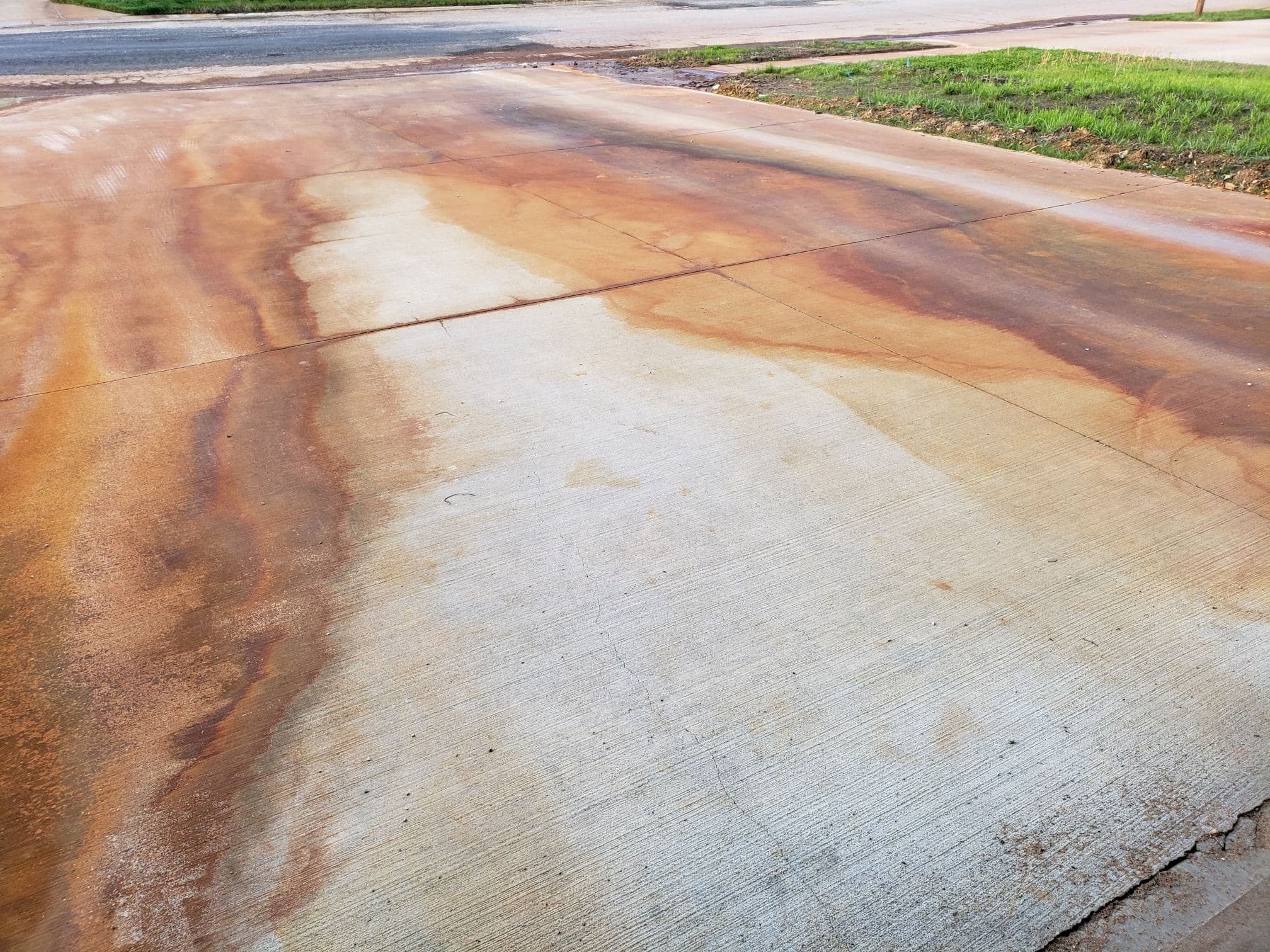 Rust staining cannot be removed with pressure or regular cleaners because it is a chemical bond, not surface dirt. It requires an acid based rust treatment that breaks the iron oxide bond. Just as important, the source needs to be addressed, an adjusted sprinkler head or furniture leg caps, or the stain comes right back.
What are the dark or black patches?
Dark and black patches usually come from one of two sources. The first is oil, grease, or automotive fluid, most common near the garage, in parking areas, and anywhere a vehicle sits. These soak into the porous concrete and darken the surface. The second is organic growth, mildew and algae, which show up as dark patches in shaded and consistently damp areas.
Oil staining needs a degreaser that breaks down and lifts the oil out of the concrete pores, since pressure alone just spreads it around. Organic darkening needs a cleaning treatment that addresses the growth rather than only rinsing the surface.
What is the white chalky film?
A chalky white film or haze on concrete is usually efflorescence, which is mineral salt deposit. Water moves through the concrete, and as it evaporates at the surface it leaves behind the dissolved salts as a white residue. It is common on newer concrete, retaining walls, and areas that stay damp.
Rinsing it with water actually makes it worse in the short term, since adding moisture to already salt laden concrete pulls more salts to the surface. Efflorescence needs an appropriate treatment to dissolve and remove the mineral deposits rather than just wetting them.
What are the reddish brown stains near the lawn edges?
Reddish brown staining along driveway edges and near landscaping is typically red clay, which is a defining feature of Wake County soil. When rain carries iron rich clay runoff onto the concrete and it dries, it bonds into the porous surface. It behaves somewhat like rust because of the iron content, and like rust it does not simply rinse away.
Red clay staining responds best to a pre treatment that breaks the bond, followed by surface cleaning. Without the pre treatment, pressure washing lightens it but leaves the embedded staining behind.
What are the tire marks and scuff lines?
The dark curved marks in driveways and parking areas are tire marks, a mix of rubber residue and the heat transfer from tires turning and braking on the same spots. They concentrate at the apron, turning points, and anywhere vehicles maneuver.
Tire marks need surface cleaning, and heavier ones benefit from a pre treatment to break down the rubber residue so it lifts cleanly rather than smearing.
Why does my whole driveway look dull and gray even without specific stains?
Sometimes there is no single stain, just an overall dullness. That is the cumulative result of general grime, dust, pollen residue, and light organic growth building up gradually across the whole surface over time. Because it happens slowly, the eye adjusts and stops noticing until the concrete is cleaned and the original color comes back.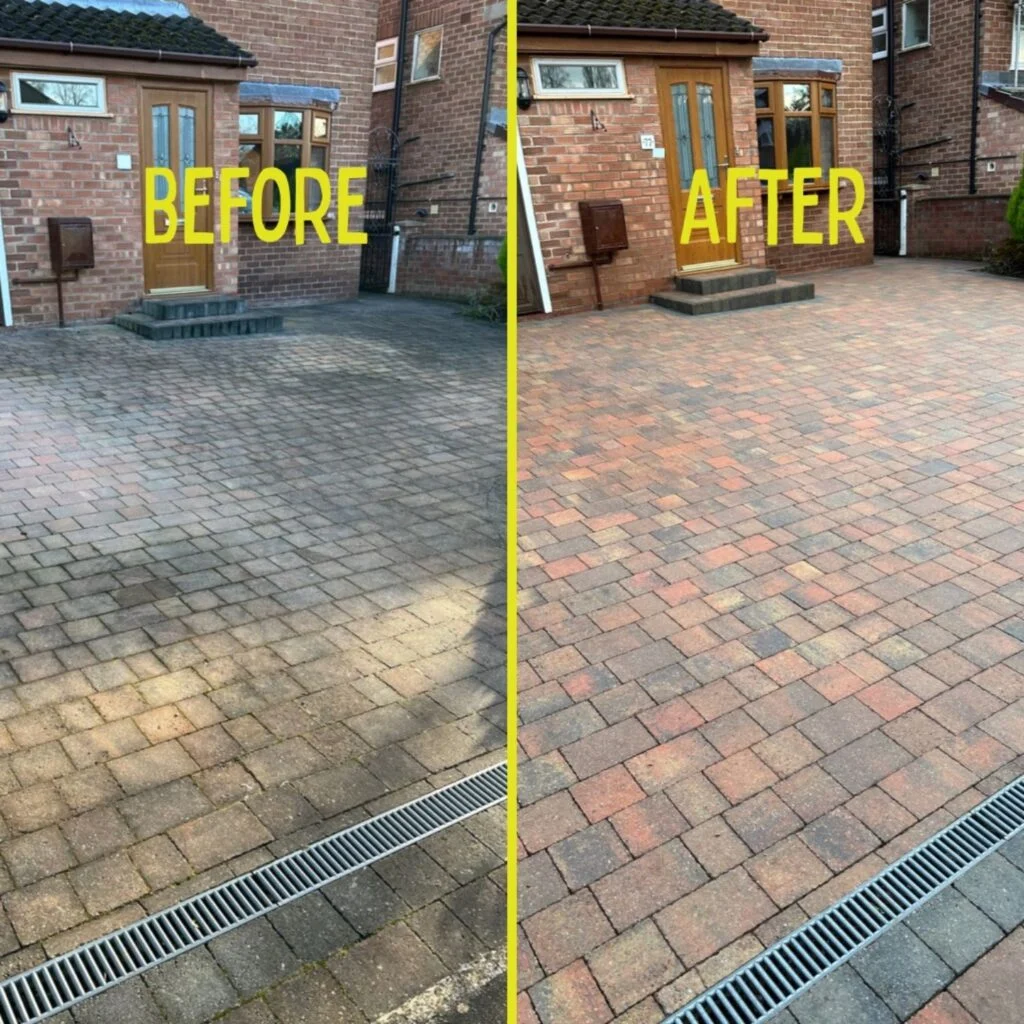
This responds well to a full surface cleaning, which lifts the accumulated layer evenly and restores the concrete to its actual color.
How do I know which treatment my concrete needs?
The short answer is that most driveways and patios have more than one type of staining at once, an oil spot near the garage, rust by the sprinklers, red clay at the edges, and general dullness across the middle. Effective cleaning means identifying each one and treating it with the right method, then surface cleaning the whole area for an even result. That combination is what produces concrete that actually looks restored rather than just rinsed.
If you have been looking at your driveway or patio trying to figure out what the stains are and why they will not come off, knowing what you are dealing with is the first step, and the right treatment for each one is what finally removes them. We serve Raleigh, Cary, Apex, Wake Forest, Garner, and the greater Wake County area.
Schedule Pressure Washing in the Greater Raleigh Area for driveway cleaning, concrete stain removal, and exterior cleaning throughout the Triangle.
Learn more about our Residential Pressure Washing services at https://p2wash.com/residential/
You can also explore our Driveway Cleaning services at https://p2wash.com/residential/driveway-cleaning/
Get a Free Estimate or Book a Cleaning Today with P2 Pressure Washing. Call 919 893 3399.




