

If you have walked past the shaded side of your house or along the foundation on a humid day and caught a musty, earthy smell, you are not imagining it. With Raleigh sitting in a warm, rainy, humid start to August, this is exactly the kind of weather that brings that smell out. It is a sign of something growing on or near your home, and it is worth understanding before it gets worse.
Here is what causes that musty exterior smell and what to do about it.
What is that musty smell around the outside of my house?
That earthy, damp smell is the odor of mildew and algae growing on exterior surfaces. It is the same family of biological growth that causes green and black staining on siding, but you often smell it before the staining becomes obvious, especially in shaded or poorly ventilated areas.
The smell is strongest in humid weather because moisture activates the growth and carries the odor. On a dry day you might not notice anything. On a humid day like today, the same spot can give off a distinct musty smell.
Where does the smell usually come from?
A few specific areas around a home tend to be the source:
- The foundation line and lower siding, where rain splashback keeps things damp and organic debris collects
- The shaded north and east facing walls that stay damp longer and grow the most mildew
- Behind shrubs and landscaping planted close to the house, where airflow is limited and moisture lingers
- Under decks, porches, and covered areas that stay humid without direct sun
- Around gutters and downspouts that keep certain spots consistently wet
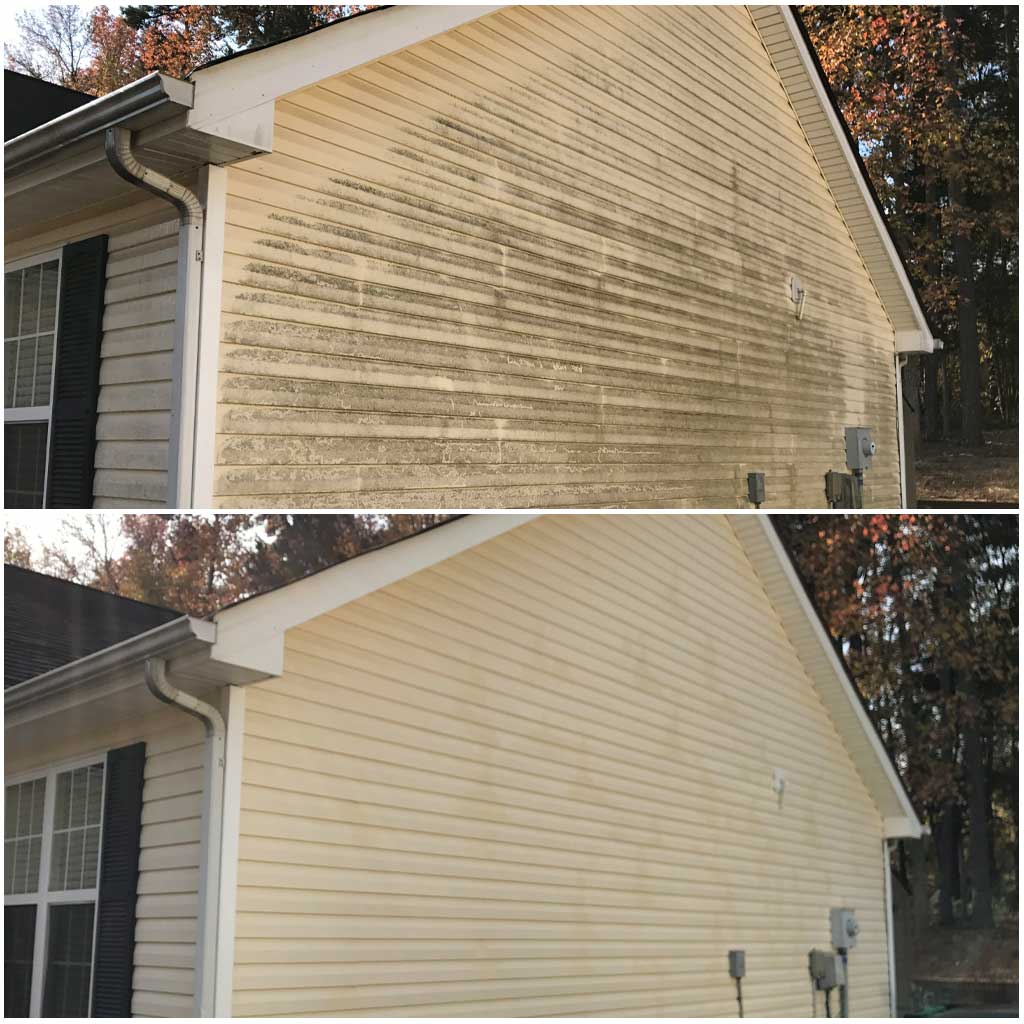 If you follow your nose on a humid day, the smell usually leads to one of these damp, shaded zones.
Why is humid weather when I notice it most?
Mildew and algae need moisture, and humidity provides it constantly. During a humid, rainy stretch like the one Raleigh is in right now, surfaces never fully dry out, the growth stays active, and the musty odor it produces is at its strongest.
Dry weather suppresses the smell temporarily because the growth goes dormant on the surface, but it does not remove it. The next humid day brings it right back, which is why the smell seems to come and go with the weather.
Is the musty smell a problem or just unpleasant?
Mostly it is a signal. The smell itself is not harmful outdoors, but it tells you that biological growth has established itself on or around your home, and that growth causes real issues over time. It holds moisture against siding, trim, and wood surfaces, which can contribute to breakdown and rot. It spreads across more of the exterior each season. And growth concentrated near windows, vents, and doors sits closer to the points where it can affect the air around entryways.
For anyone sensitive to mildew, a strong musty smell around frequently used entrances is worth addressing sooner rather than later.
Will it go away on its own once the weather dries out?
No. The smell fades when things dry, but the growth causing it stays put and reactivates the next time humidity rises. This is why homeowners often notice the same musty smell in the same spot summer after summer. Without removing the growth, the cycle just repeats.
Rain does not help either. It does not wash the mildew away, it feeds it. A humid, rainy stretch like this one actually strengthens the growth and the smell rather than clearing it.
How do I get rid of it?
Removing the smell means removing the growth producing it. A garden hose will not do it, since the mildew is bonded to the surface. A pressure washer on high can damage siding and wood and still leave the growth to regrow.
The right method is soft washing, which uses low pressure and a cleaning solution that kills the mildew and algae at the root. Because it treats the growth rather than just rinsing the surface, it removes both the staining and the musty smell, and the results last far longer than a simple rinse.
How do I keep it from coming back?
After a proper cleaning, a few things slow the regrowth:
- Trim back shrubs and branches that shade the house and trap moisture against it
- Improve drainage and address downspouts that keep certain areas constantly wet
- Keep the foundation line and lower siding clear of piled mulch and debris that hold moisture
- Schedule regular soft washing to keep the growth from getting established enough to smell
If the outside of your house has that musty smell on humid days, that is mildew and algae growth, and soft washing removes both the smell and the staining that comes with it. We serve Raleigh, Cary, Apex, Wake Forest, Garner, and the greater Wake County area.
Schedule Pressure Washing in the Greater Raleigh Area for soft wash house washing and exterior cleaning throughout the Triangle.
Learn more about our House Washing services at https://p2wash.com/residential/house-washing/
You can also explore our full Residential Pressure Washing services at https://p2wash.com/residential/
Get a Free Estimate or Book a Cleaning Today with P2 Pressure Washing. Call 919 893 3399.

