

If you’ve watched an afternoon thunderstorm roll through and thought the rain would rinse your house off, only to notice it looks worse afterward, you’re seeing something real. Summer storms in Raleigh don’t clean your home’s exterior — they actively feed the growth that makes it look dingy. And right now, with hot days and pop-up storms almost every afternoon, the conditions are working against your siding, roof, and concrete.
Here’s what’s actually happening during these summer storm cycles.
Why doesn’t rain clean my house?
It seems logical that rain would wash dirt and grime off your exterior, but it does the opposite for the main thing that makes homes look dingy: algae, mold, and mildew. These are living organisms, and they need moisture to grow. Every afternoon thunderstorm soaks your siding, roof, and concrete, and then the summer heat creates warm, humid conditions as everything dries — which is exactly what algae and mildew need to spread.
So instead of rinsing the growth away, each storm essentially waters it. Rain also splashes soil, pollen, and organic debris from the ground back up onto the lower portions of your siding, adding to the buildup rather than removing it.
Why is the summer heat-and-storm cycle so hard on my home?
Raleigh summers follow a punishing pattern for exterior surfaces: hot, humid mornings, an afternoon or evening thunderstorm, then more heat and humidity as it dries. This wet-warm-wet-warm cycle repeats day after day, and it’s close to ideal growing conditions for biological growth.
- Siding stays damp longer in humid conditions, letting algae establish and spread — especially on shaded north and east-facing walls
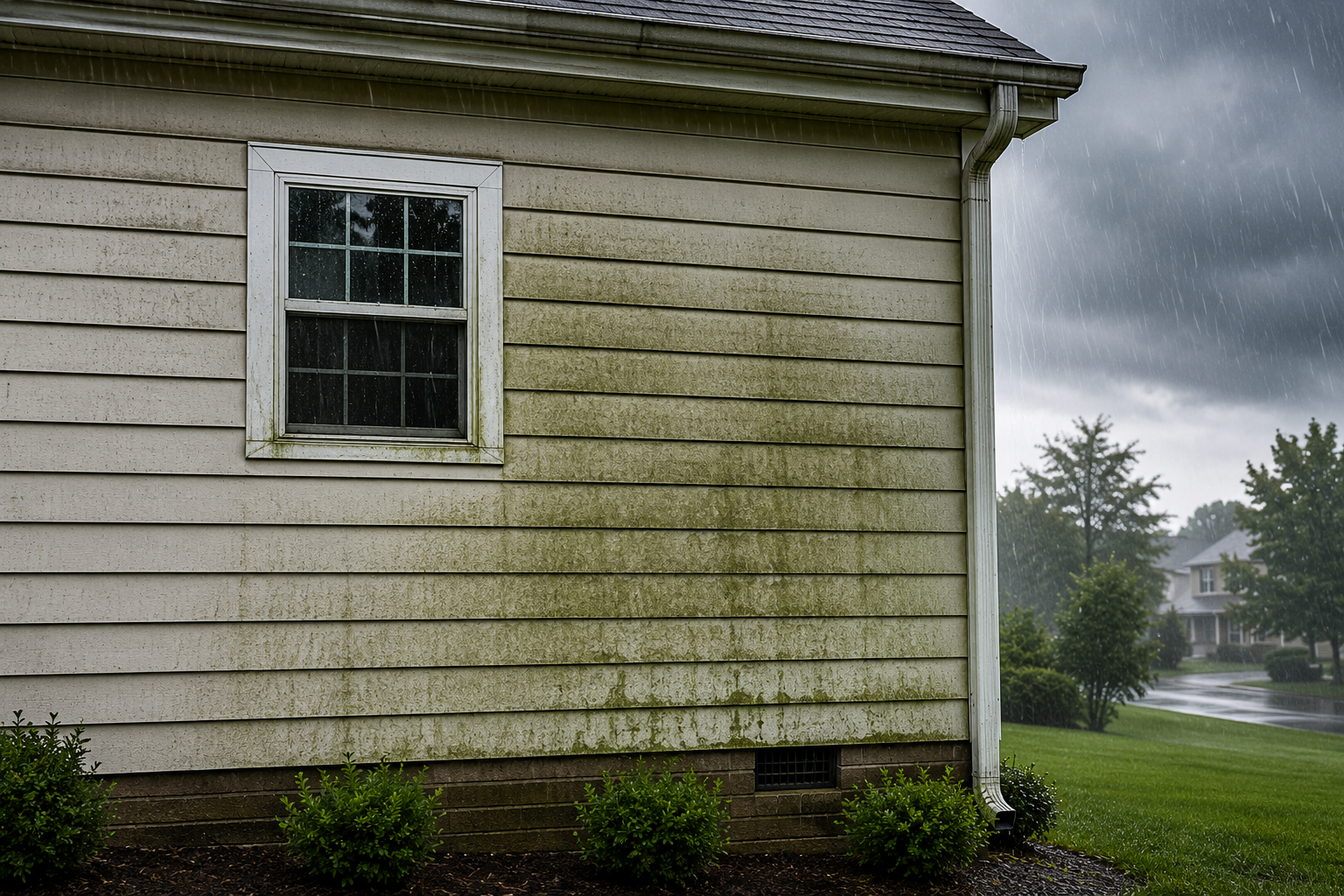
- Roofs are prime territory for Gloeocapsa Magma algae, which thrives in exactly this heat-and-humidity combination
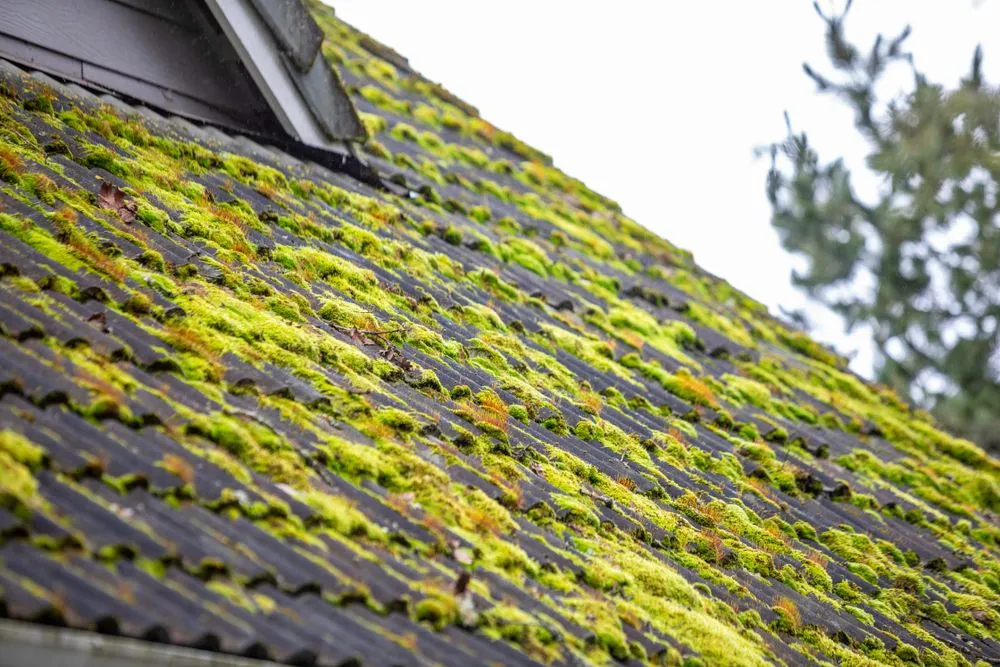
- Concrete driveways, walkways, and patios develop algae in shaded and low-lying areas that stay wet between storms
- Decks and fences trap moisture in the wood grain and surface texture, growing green film and getting slippery
Why does my house look dingy even right after it rains?
Right after a storm, everything is wet, which can temporarily mask how much buildup is there. But as the surfaces dry in the sun, a few things happen: the algae film becomes more visible as it dries, the water carries dirt into streaks and lines that dry visibly, and any splashback from the storm leaves a fresh band of grime along the lower siding and foundation.
The result is that your house often looks worse a day after a storm than it did before — dried water lines, intensified algae color, and fresh splashback all showing up at once.
Does a pressure washer fix summer buildup?
Not on most surfaces, and it can cause damage. High-pressure washing on siding forces water behind lap seams and strips caulk; on a roof it blows off the protective granule layer and voids shingle warranties; on wood it raises the grain. And crucially, pressure alone doesn’t kill the algae and mold — it just removes the visible top layer, so it grows back quickly.
The right method for biological growth is soft washing — low pressure combined with a cleaning solution that kills the algae, mold, and mildew at the root. Because it treats the growth rather than just rinsing it, the results last far longer through the summer storm season.
When is the best time to clean during summer?
The ideal window is a dry stretch between storm cycles. Cleaning when there’s a day or two without rain lets the treatment work properly and the surfaces dry evenly, without an incoming storm washing away the solution or re-wetting everything before it’s done.
The practical point for summer is this: cleaning now removes the organic growth that the storms would otherwise keep feeding all season. A home cleaned in early-to-mid summer stays cleaner through the rest of the storm season, because the biofilm that holds moisture and future dirt has been removed.
What should I have cleaned to get ahead of it?
For most Raleigh homes dealing with the summer storm cycle, the highest-impact combination is:
- Soft wash the house — siding, trim, soffits, and gutters, focusing on the shaded elevations where growth is worst
- Soft wash the roof if black streaks are visible, since summer is peak algae season up there
- Clean the driveway, walkways, and patio where algae builds up in shaded and low-lying spots
- Clean the deck if it’s getting green or slippery — a real safety point during a wet season
Getting these done during a dry window keeps the summer storms from continuing to feed the growth for the rest of the season.
If your home has been looking dingier with each round of afternoon storms, that’s the storm cycle feeding the algae — and soft washing removes it safely and keeps it from coming right back. We serve Raleigh, Cary, Apex, Wake Forest, Garner, and the greater Wake County area.
Schedule Pressure Washing in the Greater Raleigh Area for soft wash house washing, roof cleaning, driveway cleaning, and exterior cleaning throughout the Triangle.
Learn more about our House Washing services at https://p2wash.com/residential/house-washing/
You can also explore our full Residential Pressure Washing services at https://p2wash.com/residential/
Get a Free Estimate or Book a Cleaning Today with P2 Pressure Washing — (919) 893-3399.

