

If you’ve noticed the dark streaks on your roof looking more pronounced lately, the summer heat is part of the reason. We just finished a soft wash roof cleaning on a Raleigh-area home this week, and with temperatures climbing toward 95 degrees for the July 4th holiday, this is exactly the time of year when roof algae is at its most active and most visible.
Here’s what’s actually happening up there and why summer makes it worse.
What are the black streaks on my roof?
The dark streaks running down your shingles are not dirt, soot, or water staining. They’re a living algae called Gloeocapsa Magma that feeds on the limestone filler in asphalt shingles. It typically starts near the peak of the roof where debris and moisture collect, then spreads downward in streaks as it grows.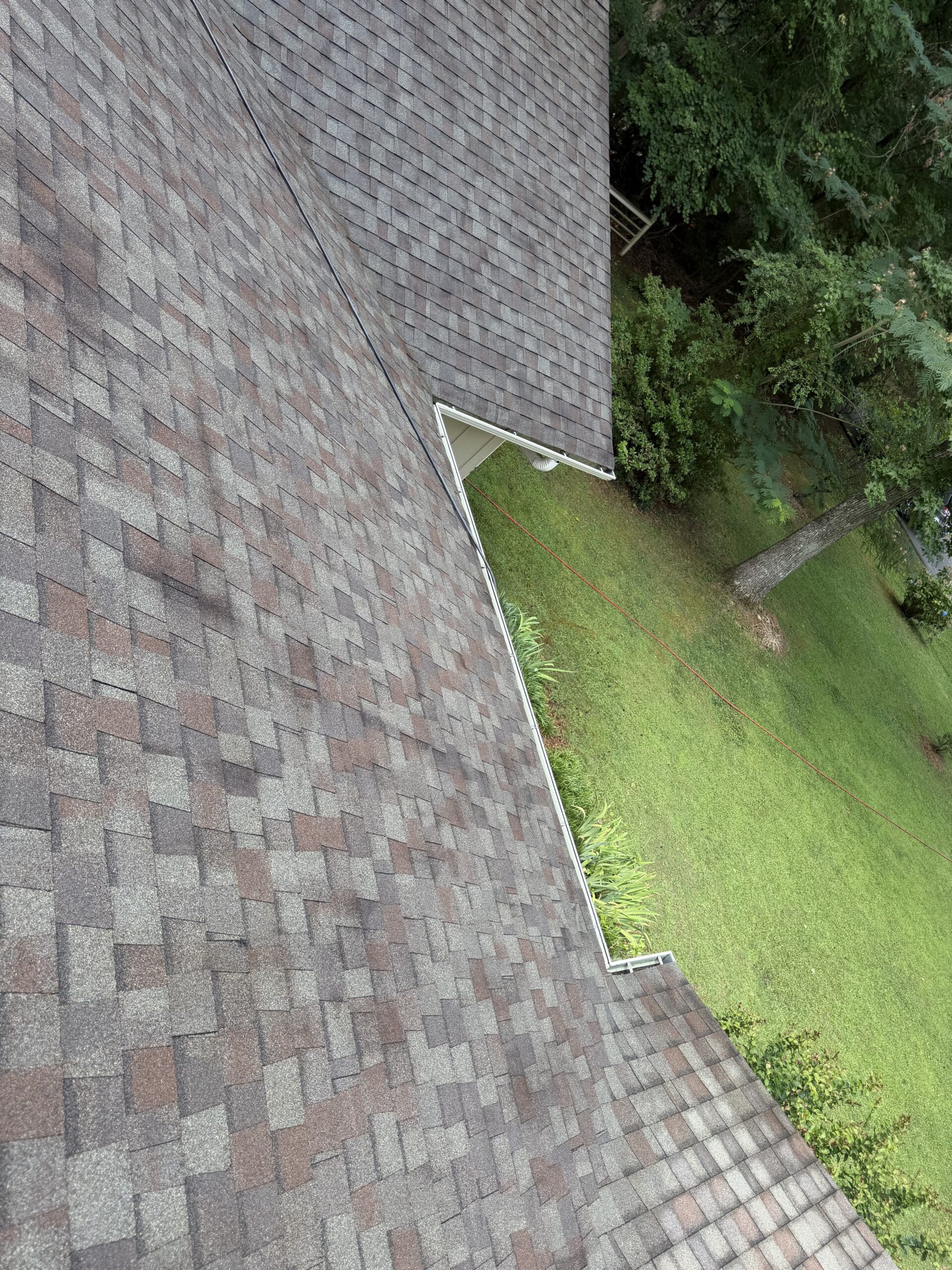
It’s extremely common on roofs throughout Raleigh and the Triangle because our climate gives it everything it needs: heat, humidity, and tree coverage that keeps roof surfaces damp.
Why does summer heat make roof algae worse?
Gloeocapsa Magma is most active in warm, humid conditions — which describes a Raleigh summer almost perfectly. The combination of high heat and the humidity that builds before and after summer thunderstorms creates ideal growing conditions. Algae that was a faint streak in spring can become dark and widespread by mid-summer if left untreated.
The heat also makes the streaks more visible. As the roof surface dries and bakes in direct sun, the contrast between the algae-stained sections and the cleaner areas of the shingle becomes sharper, which is why homeowners often notice the streaks most during hot, sunny stretches like this week.
Is roof algae actually damaging my roof?
Yes — it’s not just cosmetic. The algae retains moisture against the shingle surface and feeds on the shingle’s limestone filler, which over time degrades the granule layer that protects your roof from UV damage. A roof with untreated algae growth can show accelerated aging and a shortened lifespan.
There’s also an insurance angle. Some insurers have started flagging visible roof algae during inspections, and in some cases it can affect coverage or renewal. Addressing it protects both the roof itself and your standing with your insurer.
Why can’t I just pressure wash it off?
This is the most important thing to know about roof cleaning: never pressure wash an asphalt shingle roof. High pressure blasts off the protective granule layer that shields the shingle from UV and water, causing real and permanent damage. Most shingle manufacturers — including the brands common on Raleigh homes — explicitly state that high-pressure washing voids the warranty.
A garden hose won’t do anything either, because the algae is bonded to the surface and water alone doesn’t break it down.
What actually removes roof algae safely?
The correct method is soft washing — a low-pressure application of a cleaning solution that kills the algae, moss, and mildew at the root, followed by a gentle rinse. The solution does the work, not the pressure. Done correctly, soft washing removes the streaks completely without touching the granule layer or affecting the shingle warranty.
The process is:
- Apply the cleaning solution to the full roof surface at low pressure
- Allow dwell time for it to penetrate and kill the algae
- Rinse gently — no blasting, no granule loss
- Treat any stubborn moss or lichen patches as needed
The dead algae continues to wash away over the following days with normal rain, leaving a clean, even roof.
Why is this week a good time to get it done?
This week’s weather is actually ideal for roof cleaning. The hot, dry stretch heading into July 4th — sunny and in the 90s with no rain — means surfaces are dry and there’s no incoming weather to interfere with the treatment. It’s also the holiday weekend, when many homeowners have family and guests coming over and want the home looking its best from the street.
Getting the roof cleaned now means removing the algae while it’s at its most active, before the rest of summer lets it spread further — and having the home looking sharp for the holiday.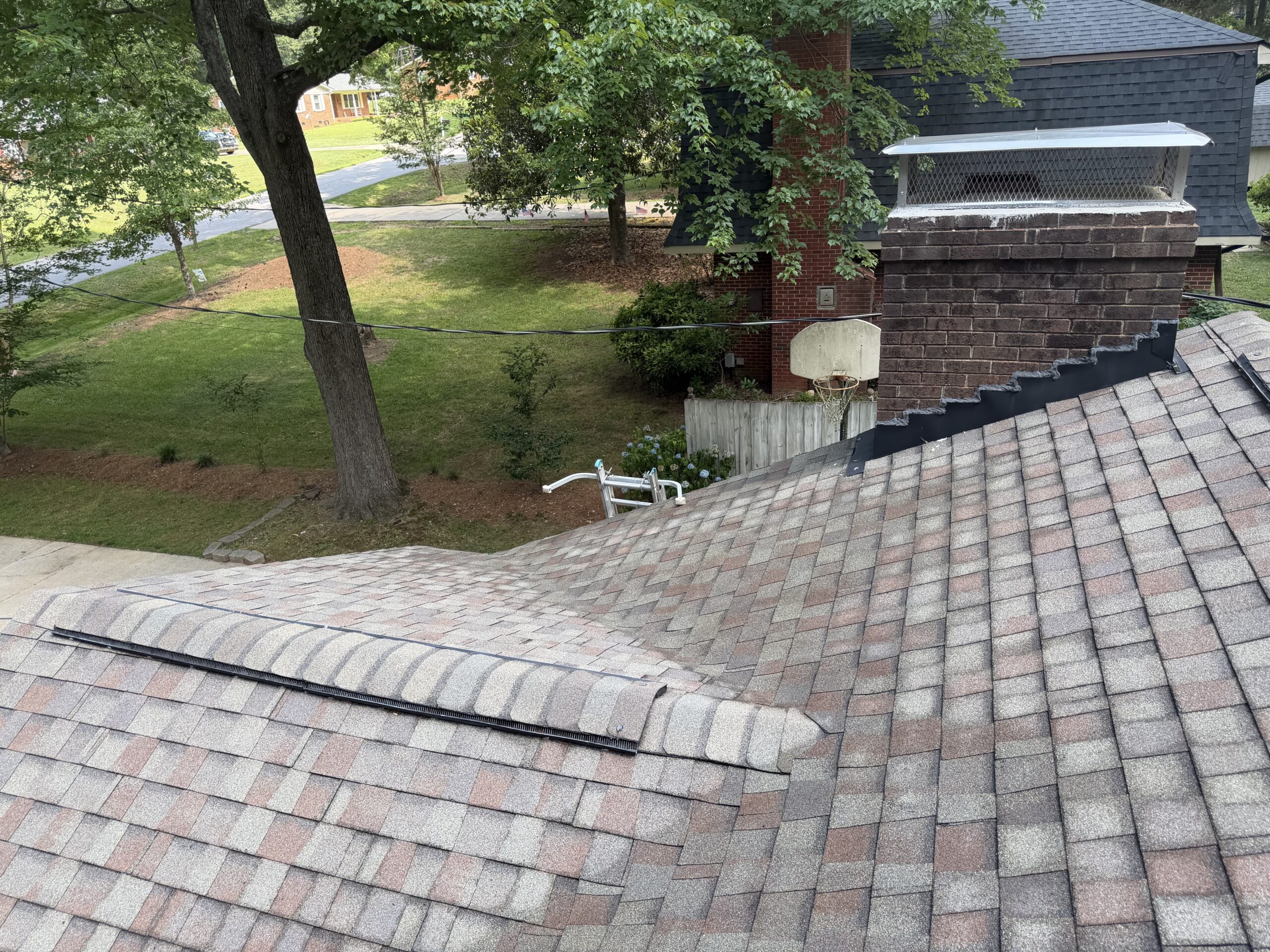
How long do the results last?
Soft wash roof cleaning results typically last 2–3 years in the Raleigh climate before re-treatment is needed. Roofs with heavy shade or significant tree coverage may need attention sooner, while roofs in more open, sunny lots tend to stay clean longer.
If the streaks on your roof have been getting darker through this summer heat, it’s a sign the algae is spreading — and the dry holiday week is a good window to get it cleaned safely. We serve Raleigh, Cary, Apex, Wake Forest, Garner, and the greater Wake County area.
Schedule Pressure Washing in the Greater Raleigh Area for soft wash roof cleaning, house washing, and exterior cleaning throughout the Triangle.
Learn more about our Roof Cleaning services at https://p2wash.com/residential/roof-cleaning/
You can also explore our full Residential Pressure Washing services at https://p2wash.com/residential/
Get a Free Estimate or Book a Cleaning Today with P2 Pressure Washing — (919) 893-3399.

