

If you’ve moved your patio furniture and found perfect rust-colored circles or rectangles underneath where the legs were sitting, that’s not dirt hiding under the furniture. It’s rust transferring directly from the metal into the concrete — and rainy days like today make it worse.
This is one of the most specific and most fixable staining problems we see on patios and pool decks around Raleigh, and it’s almost always misunderstood as a deeper cleaning problem than it actually is.
Why does metal furniture leave rust marks on concrete?
Metal patio furniture — especially older wrought iron, steel-framed chairs, and umbrella stands — develops rust on the underside of the legs and base where moisture collects and doesn’t dry out as quickly as the rest of the piece. Every time it rains, or even when morning dew settles, that moisture sits against the metal-concrete contact point longer than anywhere else on the furniture.
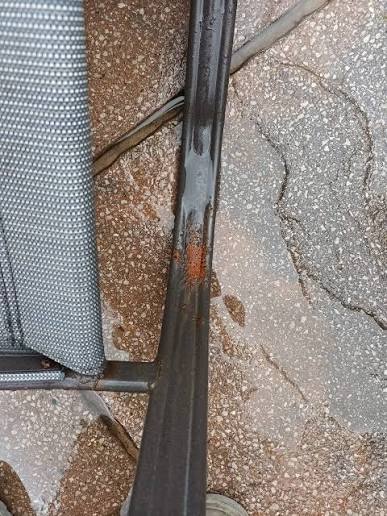 Over time, the rust forming on the metal leaches directly into the concrete below it. Concrete is porous, so once the iron oxide makes contact, it absorbs into the surface rather than just sitting on top of it. That’s why the rings are still there even after you move the furniture away and sweep the area.
Why does rain make it worse?
Rain is the delivery mechanism. A dry patio with rusty furniture legs doesn’t transfer much — but the moment rain or heavy dew gets under the furniture, it creates the wet contact point that pulls rust off the metal and into the concrete. Today’s rain in Raleigh is doing exactly that to any furniture with rust spots sitting on concrete right now.
The longer furniture sits in the same spot through repeated rain cycles, the deeper and darker the ring becomes. A furniture set that hasn’t been moved in a year or two usually has the most pronounced staining.
Will the rust marks go away if I just move the furniture?
No — moving the furniture stops new staining from forming, but it doesn’t remove what’s already there. The iron oxide that’s already absorbed into the concrete stays put. You’ll be left with a clean patio except for distinct rust-colored rings exactly where the furniture used to sit.
How do you remove rust rings from concrete?
Removing rust stains from concrete requires an acid-based rust treatment — the same approach used for irrigation and fertilizer rust staining. Regular pressure washing alone won’t lift it because the iron oxide is bonded into the porous surface, not just sitting on top.
The process is:
- Apply an acid-based rust removal solution directly to the stained rings
- Allow dwell time for the solution to break the iron oxide bond
- Agitate if needed on heavier or older staining
- Rinse thoroughly
- Reassess — long-standing rust rings may need a second treatment pass
How do I stop it from happening again?
A few practical fixes prevent future rust rings:
- Furniture leg caps or coasters — placing a plastic or rubber cap under each metal leg breaks the direct contact between the rusting metal and the concrete
- Moving furniture periodically — shifting pieces every few months prevents any single spot from taking repeated moisture exposure
- Treating the furniture itself — sanding and repainting or sealing rusted furniture legs reduces how much rust is available to transfer
- Elevated furniture pads — some outdoor furniture comes with raised feet specifically designed to reduce ground contact moisture
Does this happen on pool decks too?
Yes — pool decks see this constantly because of the combination of constant moisture, metal pool furniture, ladders, and railings. The concrete around pool equipment anchors and furniture legs is often some of the most heavily rust-stained concrete on a property, simply because it’s wet more often than a regular patio.
Is this the same as red clay staining?
It’s a related problem but a different source. Red clay staining comes from soil runoff during rain. Rust rings from furniture come from the metal itself. Both require the same type of acid-based treatment to remove, which is why we often treat them together during a full driveway or patio cleaning visit.
With rain coming through today and more humidity building into the weekend, this is exactly the kind of day that adds another layer to existing rust staining under furniture. If you’ve noticed rings under your patio set, pool furniture, or planters, now is a good time to get them treated before they set in any deeper.
We serve Raleigh, Cary, Apex, Wake Forest, Garner, and the greater Wake County area. Schedule Pressure Washing in the Greater Raleigh Area for rust removal, patio and pool deck cleaning, and concrete surface treatment throughout the Triangle.
Learn more about our Residential Pressure Washing services at https://p2wash.com/residential/
You can also explore our Rust Removal services at https://p2wash.com/residential/rust-removal/
Get a Free Estimate or Book a Cleaning Today with P2 Pressure Washing — (919) 893-3399.




